
Pimlico Painters & Decorators
Interior decorating
Private rooms in Pimlico are covered by two notes that are easy to blur and useful to keep apart. One is the room-by-room repaint of a flat or a house. The other is the colour, sheen and wallcovering decision that has to be accepted before tins or rolls are ordered. The same home often needs both. They are still different instructions, with a different bundle of photographs and a different person who may need to say yes.
Discuss your project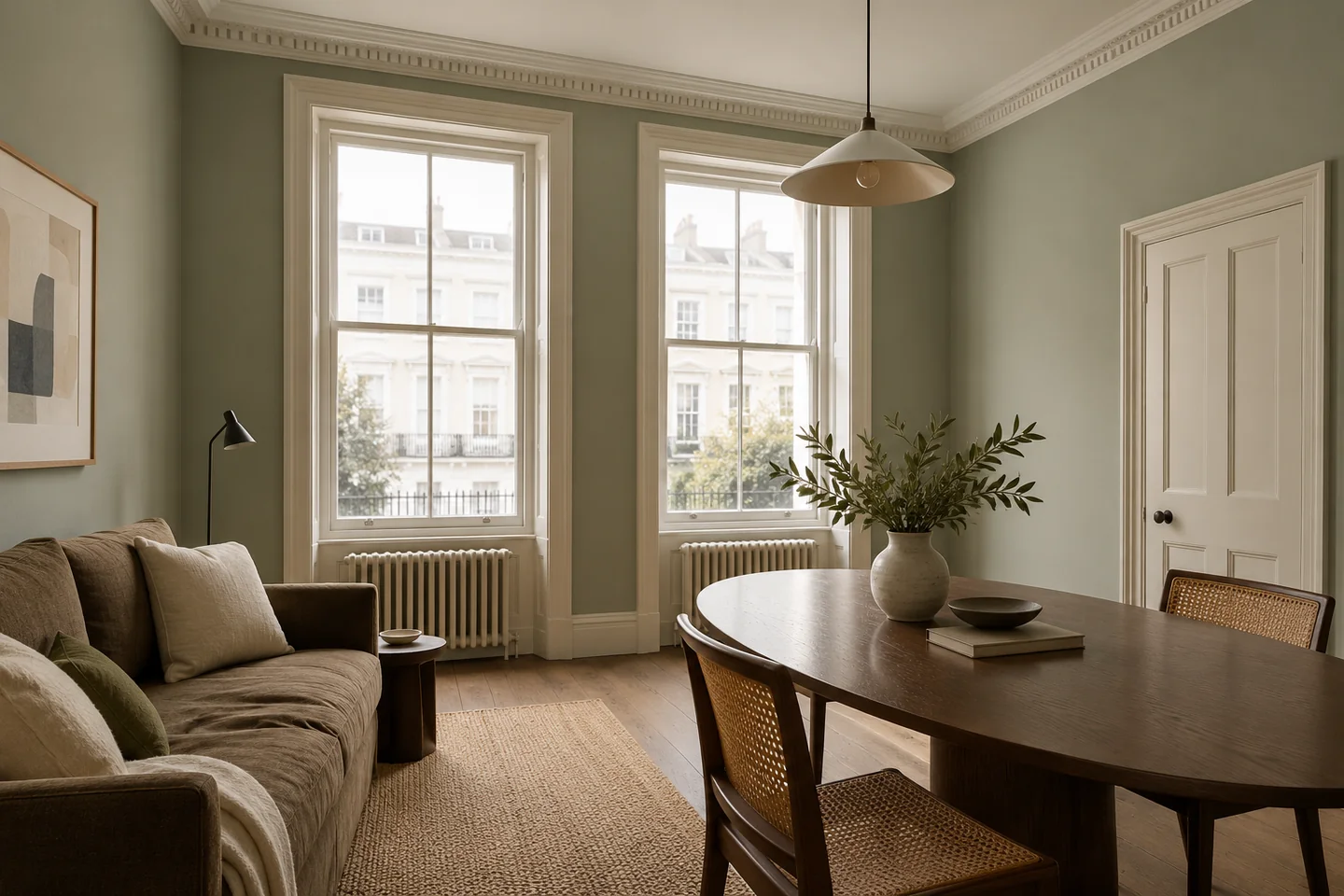
Services in this group
Flat & whole-house interiors
In Pimlico, make a tall reception room feel settled, bring quieter colour to a bedroom, or give a whole home a coherent finish. Our interior decorating service brings walls, ceilings and painted joinery into one carefully resolved scheme.
Explore the details 02Colour & wallcoverings
In a Pimlico room, a restrained palette can still have depth. Explore how a wall colour sits beneath the cornice, how a paper meets a window reveal and how the same room changes from daylight to lamplight.
Explore the detailsWhat a room schedule in a Pimlico flat includes
Many Pimlico houses have been subdivided, and the street still reads as a run of sash windows in cream stucco. Behind one of those windows the interior painting note is a schedule of the rooms you occupy: ceilings, cornices, ceiling roses, walls, chimney breasts, the inside of tall reveals, doors, architraves, skirtings, and a private staircase when the commission is the house rather than a single flat. Name the room that can hold furniture, the bedroom that has to be slept in, and whether the kitchen must return to use before the last room starts. Preparation belongs in that schedule. Loose coatings come back to a sound edge, cracks and old patches are filled level, stains are primed when the system needs a barrier, and new skim receives a mist coat once it is ready rather than a heavy film on the first day. Mouldings are filled as carefully as the broad wall, because a clumsy repair shows whenever light crosses it. Dust is contained before rubbing down begins. The schedule stops at the flat door. It does not take in the shared stair, the street elevation, or rooms that belong to someone else.
Where colour and wallcoverings take over
Open the colour and wallcoverings note when the unresolved question is how the finish will look, not which rooms are in the job. A card on a table cannot describe a tall reception room. A useful sample is large enough to read, placed first on the wall that takes the sash light and then on the wall that sits in shadow, and looked at again under the lamps the household actually uses after dark. Ceiling colour and the sheen on doors are judged in the same visit: a bright ceiling can make a careful wall look dull, and a glossy door can sit awkwardly under a flat wall. Patterned paper is a layout before it is a pasting job. Take the full height from the cornice or picture rail down to the skirting, and then the shorter lengths over each door, window and chimney breast. Decide the wall people see first, and set the pattern from that view so a seam does not land on a corner and a reveal is wide enough to carry the design. Lining is used when the product and the plaster call for it. Existing paper may release cleanly or may bring the face of the wall with it, so that uncertainty stays visible until the wall is opened. Batch numbers are checked before cutting. This note does not replace the room schedule. A papered reception room still needs the painting note for the ceiling, the joinery and any wall that stays painted.
Where the interior notes stop
Use interior painting when you can already name the rooms and the joinery, and the open questions are preparation, the order of rooms, and how the household keeps living there. Use colour and wallcoverings when a sample, a sheen or a pattern is still undecided, including a lining paper under a paint finish. If both are open, send both and label them, so a colour experiment is not read as permission to coat the common stair. The street face of a sash, a front door, a porch profile or a railing belongs with exteriors and joinery, even when the same window has an inside face in the flat. Write both faces if both are wanted, and name who may approve the pavement side. Westminster’s design guide offers a general picture of window colour for terraces. That is a check for an elevation, not a scheme for a bedroom. The hall beyond the flat door, and any block or estate specification, belong with shared buildings. A leaseholder who controls only the rooms should say so in the first note. If a freeholder or managing agent has to approve contractors, deliveries or the use of the stair, that rule travels with the enquiry. It is not discovered on the morning the materials arrive.
Sources: Westminster: Pimlico design guide
What to send with each interior enquiry
For a room repaint, send the address and the floor, a list of rooms, and whether ceilings, cornices and joinery are included as well as the walls. Photographs of each room, plus close views of mouldings, stains and earlier patches, keep the schedule honest. Say who will be in occupation, which room can store furniture, and how materials reach an upper flat, including any house rule about the common stair, deliveries and waste. For colour, describe the flooring, curtains and upholstery that will stay, and say where a large sample can be viewed in daylight and in the evening. For paper, send the product or a clear photograph of the design, the rooms it is meant for, and whether lining is already decided. Once a reference is accepted, record the product, the room and the person who accepted it, and keep any spare length that has been set aside for later repairs. Areas still waiting for a decision should stay marked as waiting. A sentence that only says the whole flat needs doing is a start, not a boundary. The quotation can describe only the surfaces that have been named. Recoat intervals follow the product and the conditions in the room. They are not a promise about a particular number of days.
Your Pimlico property
Let’s put the work
into a clear brief.
Tell us which rooms or shared surfaces need attention, the property address and your role in the building. Include any existing colour schedule or managing-agent requirements in your outline.
Describe the proposed work
Start with the address, the areas to decorate and any arrangements already agreed for the building.